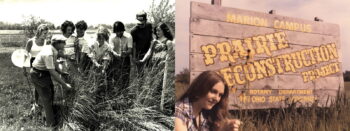
A testament to perseverance, environmental stewardship, and community collaboration, The Ohio State University at Marion has long championed prairie conservation. The establishment of the campus prairie—now known as the Larry R. Yoder Prairie Learning Laboratory—began in the 1970s and has continued for over five decades, serving as a living laboratory for students, researchers, and nature enthusiasts alike.
Dr. Larry Yoder, former associate professor of botany at Ohio State Marion, played a pivotal role in initiating prairie conservation efforts.
“The prairie is more than plants and grasses—it’s a reflection of Marion’s history, growth, and resilience,” Yoder stated. “Just as the city has revitalized itself, the prairie thrives, reminding us that we value and nurture the unique elements of our community,” Dr. Yoder said.
Yoder’s Inspiration
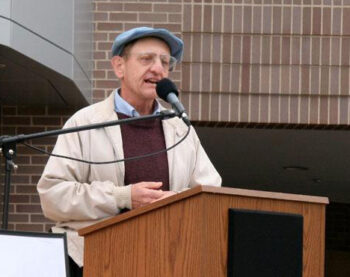
Having grown up on a northern Indiana farm, Yoder shared, he was deeply connected to the natural world. His arrival in Marion in 1972 introduced him to the unique island prairies nestled within Ohio’s eastern woodland forests. Inspired by local prairie advocates Trella Romine and Kensel Clutter, Yoder began a dedicated effort to study and protect Marion County’s native flora.
Beyond its natural beauty, the prairie serves as an invaluable educational and recreational resource. Students, faculty, and the Marion community benefit from hands-on learning opportunities while engaging with the region’s distinctive ecological heritage. The prairie supports mental and physical well-being, fosters environmental awareness, and preserves local plant genetics.
At the heart of its significance is the concept of “local ecotypes.” Seeds collected from the Claridon Prairie were used to reconstruct the prairie at Ohio State Marion, ensuring that future botanists have access to the genetic lineage of Marion County’s native plants. Additionally, Ohio State Marion houses a collection of preserved specimens in its herbarium, further supporting ongoing study and conservation.
Prairie: A Threatened Part of Ohio’s History
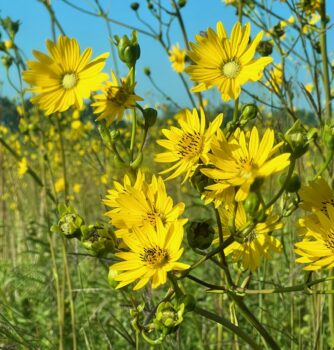
The prairie is part of the Sandusky Plains, an ecosystem characterized by native prairie grasses and flowers. Historically, Wyandot, Shawnee, Delaware, and Seneca peoples used fire for ring hunts in these prairies. European settlement led to widespread agricultural development, leaving only railroad rights-of-way and pioneer cemeteries as remnants of Ohio’s prairie peninsula.
By the 1970s, railroad maintenance threatened the last remaining prairie strip east of Marion. Local historians and environmentalists rallied to protect the Claridon Prairie, bringing together organizations such as the Marion County Historical Society, the Ohio Biological Survey, and the Ohio Division of Nature Preserves. With support from Congressman Clarence Brown, an agreement was reached with Consolidated Rail Corporation (ConRail) to preserve the site.
Planting Prairie Seeds on the Marion Campus in 1977
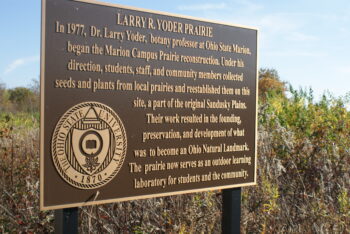
Despite the victory, permanent protection remained uncertain, prompting Yoder and his students to take proactive steps. In 1977, with support from Ohio State Marion Dean and Director C. Eugene Maynard, they harvested prairie seeds and planted them on university grounds—solidifying a legacy of conservation that continues today.
The prairie has become a multi-generational project, engaging students and faculty over fifty years, explained Yoder. A wide range of individuals—from early student “Prairie Dogs” to contemporary conservationists—have contributed to its success. Following Yoder’s departure to direct the Merry Lea Environmental Learning Center at Goshen College, Ohio State Marion faculty members, including Robert Klips, Tabor Allison, Rich Bradley and Katie Rask have continued the mission with passion and commitment.
Dr. Yoder’s Prairie Efforts Honored
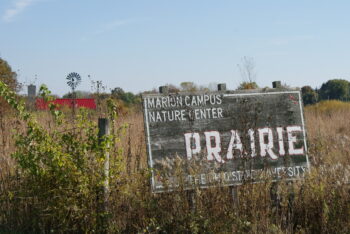
In 2007, during Ohio State Marion’s 50th Anniversary celebration, the prairie was officially named the Larry R. Yoder Prairie Learning Laboratory in recognition of Yoder’s foundational work.
“Affirmation is a kindness forever appreciated,” said Yoder. “Ohio State Marion’s decision to name the prairie during the celebration came as a complete surprise. It was, of course, most humbling. Naming the prairie regardless of who or what name was given affirms the importance of the campus’s prairie legacy and the work of multiple generations of students and faculty. Its name does recognize the initial engagement that my students and I experienced as we took the first steps to protect Marion County’s prairie ecotypes.”
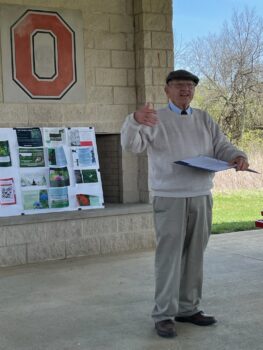
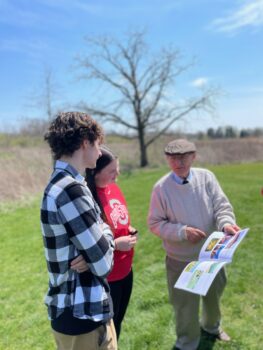
The prairie continues to serve as a space for exploration, education, and reflection. As the campus prepares for the upcoming 50th-anniversary observance of the prairie’s establishment, the community celebrates the enduring efforts that have protected one of Marion County’s most distinctive natural assets.
For more info:
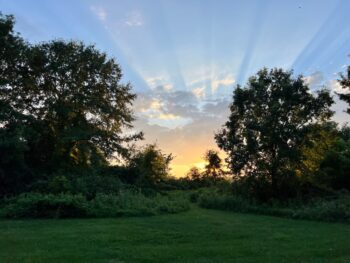
To learn more about the Larry R. Yoder Prairie Learning Laboratory, visit https://u.osu.edu/marionprairie/ or contact Dr. Katie Rask at rask.4@osu.edu.
Related articles:
The Ohio State University Marion Campus Tied to Marion History and Future | MarionMade
Carroll Neidhardt: Marion Man Preserves History | MarionMade
MarionMade! is a program of Marion Technical College.